
I logged into my brokerage account to check my positions and found something new sitting next to my stocks: contracts on who wins U.S. elections. Robinhood has them. Interactive Brokers has them through ForecastEx. Each one pays a dollar if something happens and nothing if it doesn’t. So a contract trading at 60 cents becomes a headline: “Candidate has a 60% chance of winning.”
This is new. For decades the CFTC kept election betting out of regular financial accounts, using its public-interest authority under the Commodity Exchange Act. The main exception was PredictIt, a small academic project that ran under special relief with an $850 cap per contract (later raised to $3,500).
That changed in September 2024. Judge Jia Cobb ruled for Kalshi, finding that the CFTC couldn’t block contracts on control of Congress because those contracts didn’t “involve” unlawful activity or “gaming” as the law uses those words. After a short stay, the D.C. Circuit let trading go ahead before the election. In May 2025 the CFTC dropped its appeal. Four months later, Polymarket, which had run offshore during 2024, bought a licensed exchange called QCEX for about $112 million and got the green light to come back to American users.
The pitch
The case for these markets goes back to Hayek: prices pull together scattered knowledge better than any expert or survey. If you have to put your own money down, you can’t afford wishful thinking, so prices should catch up to the news faster than polls do.
The record is messier than that. Early studies of the Iowa Electronic Markets found betting prices beat raw polls. But Robert Erikson and Christopher Wlezien showed that once you adjust polls for how far out the election is, the polls match or beat the markets. And a contract price was never a clean probability to begin with. Fees, bid-ask spreads, the cost of tying up your money until the race is certified, and bettors’ habit of overpaying for longshots all push it around.
Deep pockets, thin markets
Supporters also say you can’t rig these markets for long, because smart traders will bet against a manipulator and take the free money. Robin Hanson and Ryan Oprea saw that happen in lab experiments. Real election markets aren’t a lab. Contracts expire on a fixed date, money sits locked up for months, and plenty of down-ballot races have less than $100,000 in open interest. In a market that small, a motivated backer could move a candidate’s odds for less than the cost of one TV ad. I haven’t seen solid data on how often that happens, but campaigns already love to brag about good odds.
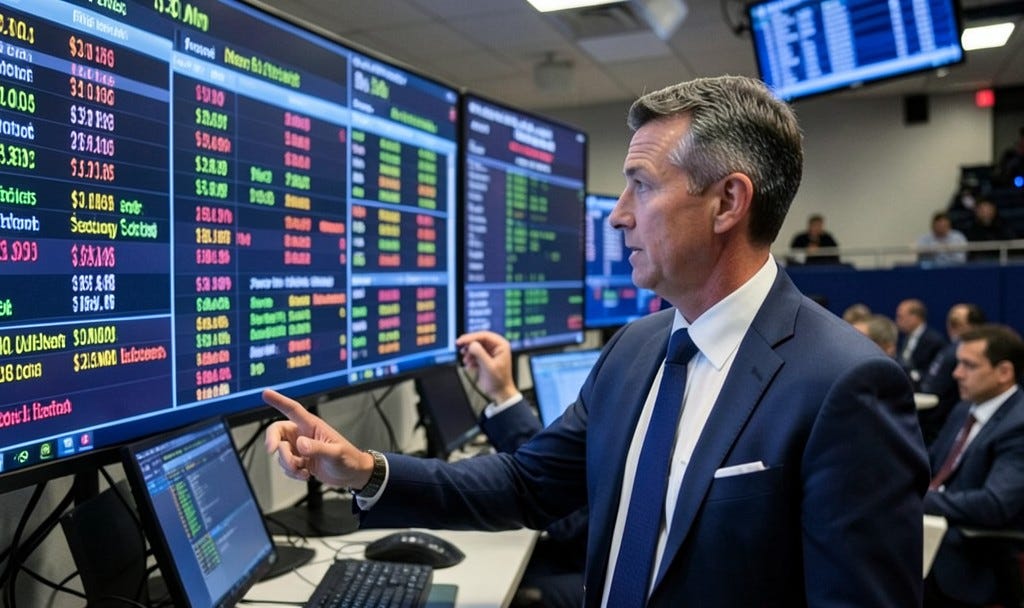
In 2024, a French trader using several accounts, including “Fredi9999,” put $30 million or more on Trump at Polymarket. Polymarket’s Trump odds ran well above the polling averages for weeks while he was buying. He said he’d paid for his own polling and believed the public polls were undercounting Trump voters. He was right, and reportedly walked away with around $50 million.
But whether he was right isn’t really the point. While the race is still going, nobody watching the ticker can tell whether a ten-point gap comes from thousands of people who know something or from one rich guy leaning on the scale.
So how accurate are these markets? The best study I’ve found is by Joshua Clinton and TzuFeng Huang at Vanderbilt. They looked at about 2,200 political markets on Kalshi, Polymarket, PredictIt, and the Iowa Electronic Markets over the last nine weeks of 2024, covering more than $3 billion in trading. Overall, 86% beat a coin flip, and prices were generally well calibrated. That sounds great until you look closer. Two-thirds of those contracts were priced under 20 cents or over 80 cents, meaning they were easy calls. In the genuinely close races, priced between 40 and 60 cents, the favorite won just 55% of the time. Arbitrage opportunities also showed up in the presidential markets almost every day. In other words, the markets are good at telling you what everyone already knows and close to a coin flip on the races that actually matter.
How the odds feed back into voters
A wheat future settles on how much wheat gets grown. Traders betting on it don’t change the harvest. An election contract settles on what people do, and people see the odds.
People also misread them. Sean Westwood, Solomon Messing, and Yphtach Lelkes found that a tight 52-48 race can show up as an 80% chance of winning, and lots of people read that 80% as a blowout. The classic Riker-Ordeshook model says people vote when the odds their vote matters, times how much they care, plus their sense of civic duty, outweighs the hassle. If the odds convince you it’s already decided, that math tips toward staying home. That effect showed up in lab voting games, and turnout in 1896 seems to have been lower where betting markets called the race early. Andrew Gelman has a fair point, though: nobody has nailed down that this cuts real-world turnout.
What we do have solid evidence for is that the odds shape what people expect. In a Brennan Center-funded experiment this September, 1,994 registered voters looked at hypothetical congressional races with NBC News polls and Kalshi odds. Moving a candidate from 50% to 84% on Kalshi raised the share of people who picked that candidate to win by 20 points. Dropping them to 16% cut it by 19. That’s about as much pull as the polls had, and more than anything about the candidates themselves.
Here’s the part that got me: only 19% of respondents thought prediction markets were accurate, compared with 37% for polls. People leaned on the odds anyway, and warning them about the markets’ flaws didn’t change that.
There’s a darker side too. When TV and social media treat a 75 or 80% favorite as a lock, without mentioning how thin or lopsided the betting is, the underdog’s win (which should happen one time in four or five) starts to look suspicious. That’s an easy opening for anyone who wants to say the election was stolen.
One person, one vote vs. one dollar, one vote
Democracy gives everyone the same voice no matter what’s in their bank account. Markets give the loudest voice to whoever brings the most money. Putting the two on the same app gives wealthy traders a megaphone over what the public expects, and nobody has shown that the prices they produce are smarter than good polling.
Since the CFTC dropped its appeal, Judge Cobb’s reading of the law stands. If Congress thinks that’s wrong, it can change the law, and the proposed Ban Gambling on Elections Act would do exactly that. The CFTC could also write real public-interest rules through the normal comment process. If these contracts stay legal, here’s what I’d want to see:
Position caps of $1,000 to $3,500 per trader across every platform
Public disclosure for large positions
A flat ban on campaign staff and pollsters trading on their own races
Minimum liquidity requirements before local races can be listed
Newsrooms that don’t run odds without saying how much money is behind them and who holds it
If one trader can drop $30 million into an order book and change the national conversation, why are we letting brokerages sell our elections as a spectator sport?
Originally published on Substack.
Comments